26 March, 2015

Back to the Mother City

For Christmas this year Emily and I traveled to Cape Town. What was already a fantastic destination was even more special as the first place I lived abroad and hadn’t been back to since. I was excited to re-visit all the places I remembered both to satisfy my nostalgia and to see how much my perceptions had changed. We also have some friends from Zambia now living there, which worked out wonderfully for us. Though we didn’t actually get to see Hans and Jacquee, they generously loaned us their apartment for our days in the city. And Christmas day with our friends Tommy and Mars made it that much more homey and special.

Our trip took us both all around town and out to other areas of the Western Cape including wine country, Cape Point, and along the Garden Route. I’ve written an itinerary below with our favorite stops, meals and lodging- complete with photos from the journey.

Car rental: I was uncertain whether we should use a budget company, but we ended up going with RentalCars.com, which connected us with a good deal at Europcar and included simple insurance coverage. We were very happy with our car and the process was straightforward.

Day 1
Cape Town
V&A Waterfront area
We spent our first day exploring the waterfront area and immediately diving into some sushi. Beluga Sushi is half price on weekdays, a good deal and only walking distance from the water. The V&A itself is a very busy mall and not a very pleasant place to just hang out unless you're in the mood for some high-end shopping, though there is a big movie theater. For dinner we tried a place down Kloof Street called Black Sheep. Food was decent, especially the tuna tartare, and the atmosphere was good for long, enjoyable conversations. They also carried a range of local craft beers which were fun to try.

Day 2
Woodstock
We spent half the day in area of town known as Woodstock, which has an air of fancy bohemian crafts. We went to the Old Biscuit Mill, which takes place every Saturday and is full of stores and stands selling unique and interesting home goods, clothes and trinkets (though not cheaply). There’s also little cafes plus a whole area with food stalls that was absolutely packed with people. The whole thing was crowded actually, probably because it was days before Christmas, but live music and seeing our friends made it a fun spot to spend the morning. I also bought myself a new watch from Bamboo Revolution.

Camps Bay
In the afternoon we paid a quick visit to the beach not far from where we were staying. The place reminds me a lot of the strip in Miami; fancy restaurants, gelato places, techno bars all jostling for space directly across the street from the beach. A fancy and somewhat overwhelming place- but the beach is nice. That evening we had dinner with Tommy and Mars, our Zamfriends, and a few of their friends. We tried a pizza place called Diva that turned out to be really delicious, and not very expensive. There were all sorts of interesting pizzas with specialty ingredients, highly recommend it.

Day 3
Table Mountain Hike
Table is a very hike-able mountain; with more impressive views than Lion’s Head but not quite as demanding as Devil’s Peak. That being said, we underestimated the effort it would require. We used the Platteklip Gorge trail, a popular route running up the middle face of the mountain. It’s very well marked and maintained, but it’s like doing a stair-master for 2 hours, so be prepared. Once on top, we decided to hike across the plateau in search of a very pleasant reservoir I remember visiting on previous hikes back in 2008. The fog of memory proved thick, however, and though we hiked across the plateau for another 1.5 hours we didn’t manage to reach it. In hindsight, the quickest way to reach it is probably by going up the Skeleton Gorge trail, on the back side of the mountain, accessible from the Kirstenbosch botanical gardens.

One thing to be wary of on Table is the rapidly shifting weather. It's common for thick clouds to completely sock in the top without warning  Even if the day is hot, it can get cold, windy and wet up there. By the time we made it back to the front edge there was no view to be had, but as soon as we descended below the cloud line we returned to a lovely sunny day. For dinner that evening we met our friends again, this time at Hudson’s on Kloof St. It’s a burger chain in the city, but a pretty good one with fancy things like bacon jam and blue cheese. They also had delicious oversized milkshakes and many varieties of potato sides. We left full and satisfied.

(From left to right: Devil's Peak, Table Mountain, Lion's Head)


Days 4 & 5
Stellenbosch
One great thing about having a rental car was being able to get out of town. Stellenbosh is wine country, and close enough to reach in time for lunch, which we had at Hartenberg Wine Estate. There are a number of options for picnicking at wineries, but this turned out to be a great one. A basket of delicious foods plus a bottle of wine for a good price, and the setting was really pretty and not crowded at all. After lunch, we visited another two wineries: Beyerskloof (intimate, nice but nothing fancy) and Simonsig (very nice atmosphere and best wines we tried). While in Stellenbosch we stayed at a guest house called Summerwood, which is really amazing. The whole place is really well-designed, has a pool, and includes an awesome breakfast. You could not visit a single winery in Stellenbosch and it’d still be worth the trip if you stayed here. For dinner we tried Helena’s, which is in the quiet downtown area, has a nice on-street patio and a fantastic mushroom risotto.

On our second day, we did another set of wine tastings:
Spier: a big brand, it has a huge estate that’s very beautiful, but attracts lots of people so it's not so intimate. The chocolate and wine pairing was nice.
Warwick: nice estate with a pond which is also a place for picnic lunch, but it’s a little more crowded.
Fairview: has a restaurant, wine tasting, and cheese tasting all on-site. It's a pretty popular place and was quite crowded- think it’s worth just going for a cheese platter. Apparently there’s a place called Spice Route next door which is a better lunch option.
On this night we had the best dinner of our trip, in my opinion, at Makaron. A little fancy and pricey, no more than in the US, but everything really wowed me- what a nice Christmas gift from my parents!

(Summerwood)

Days 6 & 7 (Christmas Eve and Christmas Day)
Cape Town
After a nice, lazy morning at Summerwood, we traveled back to Cape Town where we managed to successfully grocery shop for dinner, despite not realizing how crazy the stores would be that day. We cooked a rack of lamb and had a cozy Christmas Eve at home.

On Christmas Day we exchanged gifts at home from under our little fake Christmas tree and made crepes for breakfast. We then watched The Hobbit at V&A with Tommy and Mars, and cooked a Christmas dinner with them at their place. We were very lucky to share Christmas dinner with friends while being so far from our families.

Day 8
Cape Point
We made the drive down the peninsula to the tip of the continent, making some stops along the way. First was Muizenberg Beach, which was very windy but we were still able to admire the iconic colorful changing houses. Next we went to Simon’s Town, having lunch at a really pleasant place called Lighthouse Café (make a reservation!) and then seeing the famous penguins at Boulders Beach. We made it down to Cape Point national park by the afternoon, visiting the lookout and the beaches. We gave ourselves some time to get back up the west coast so that we could catch sunset just as we were reaching Chapman's Peak Drive, a beautiful scenic stretch of road just before Cape Town. For dinner we went to the Codfather in Camps Bay. Fair warning, they've got a clever deli-style set-up that facilitates expensive dinners. However, the fish was excellent, particularly the tuna.

(Muizenberg Beach)

(African penguin at Boulders)

 (Southern tip of the continent)

(Hout Bay, from Chapman's Peak Drive)


Day 9
When I lived in Cape Town I interned at an economic research institute. On this morning we met my old boss and his wife at a very pleasant place called Sidewalk Café for breakfast. In the evening, we hiked Lion’s Head, which is a very accessible 45 minute hike that’s great for sunset. We had dessert that night with Tommy and Mars at a place just around the corner called Bombay Bicycle Club. It was crowded (make a reservation!) and very hip, but the ice cream cigars we had were delicious.

Day 10
Highlights of this day included awesome sushi (what a treat!) for lunch at Willoughby at the V&A, and a picnic dinner at Kirstenbosch with live music. You can buy tickets for their concert series in advance here. We ended up seeing Hot Water, a South African band with catchy songs and a big stage presence.


Days 11, 12 & 13 (New Year’s Eve)
Garden Route
We wanted to explore more outside the city, so we blocked off a few days to drive part of the Garden Route, which runs all the way from outside Cape Town past Port Elizabeth in the Eastern Cape. We didn’t have time to do the whole thing, but we decided to go halfway at least halfway to where the popular destinations start.

To break up the journey, we overnighted in Oudtshoorn, a little town on the inland route away from the coast. We weren’t there for long but tried to see a bit of the place once we arrived. Unfortunately the olive tour we went to turned out to be just a shop selling olive products. On the plus side, the B&B we stayed at, Earthbound, was very cool; eccentric but still comfortable. Oudtshoorn is known for its ostrich, actually it's the "ostrich capital of the world," so that night we had an all-ostrich meal at Nostalgie, which was cheap and tasty.

The next day we arrived at our destination: Knysna. It’s a holiday spot for South Africans so the town was pretty jammed up. Despite the traffic and some light rain, it was pleasant walking around and grabbing a seafood lunch by the water at 34 Degrees South. There are lots of cool little shops along the waterfront, and we picked up a few things for home before heading to our AirBnB- the Tree Studio. It was a very cool location, a studio house built into the side of a valley below the house belong to the owner (who was very friendly and helpful). We had a great sunset view from our porch, and a gas fireplace, though it was a little too hot to use it. It was a very positive first experience with AirBnB. That night we ate at Prembreys, which, despite an older crowd and comically large chalkboard menus the poor waiters had to cart around, was definitely the best dinner we had on the Garden Route.

 (View from our patio)

The next day we had lunch at a place called East Head Cafe, good food with a nice view, and then explored the town and surrounding areas a bit more. It’s kind of a boring place, but the beaches are nice, especially out a little way to Buffels Bay. We went out for dinner, as it was New Year’s, at a place called Olive Tree, which was decently good but not standout. We made a token attempt at finding some NYE’s activities in town, but it was either too early or too quiet of a place, so we retreated home and enjoyed a nice evening there.

(East Head)

Day 14
On our last full day, we headed back to Cape Town, ringing in 2015 with sausage egg mcmuffins at McDonalds along the way. We drove along the coast this time, which allowed us to meet a friend from Kenya in Hermanus on the way, and also afforded us a pretty spectacular drive along Route 44. We had a lot of time to work with on this trip but I don’t think we could’ve crammed another thing in if we had tried. It was awesome to get back and see the place after 6 years, and felt good to see it really is as stunning and enjoyable a place as I remembered.

27 February, 2015

Input Delivery

This time each year, One Acre Fund gears up for a massive logistical undertaking. It involves hundreds of trucks moving massive quantities of farming inputs around warehouses across the country. And it's all for one objective: supplying our farmer clients with the high-quality inputs they've ordered, on time, within a day's walk from their homes.

This guarantee is a crux of OAF's program model, and addresses a key challenge faced by smallholder farmers worldwide. When everyone in the farming business is looking for these same goods at the same time each year, finding them anywhere, let alone those of high quality at a reasonable time and price, is no easy feat. By meeting this need, we're ensuring farmers can start planting on time with the best inputs. By pairing this with intensive training throughout the season on correct use of these inputs, we're maximizing their impact on farm productivity and ultimately, harvest yield.

That's why so much depends on the logistics behind moving these goods running smoothly. Thousands of staff hours are spent facilitating this, from price negotiations at a high level down to the people unloading the trucks at the pick-up site. I was able to see a few parts of this chain in action: the loading of trucks at one of our warehouses in Bungoma, and the unloading of a truck on the day one group of farmers received their goods. I've included some photos from these days below.

(Warehouse jam-packed with inputs)


(Truck loading)


(Delivery day and truck unloading)


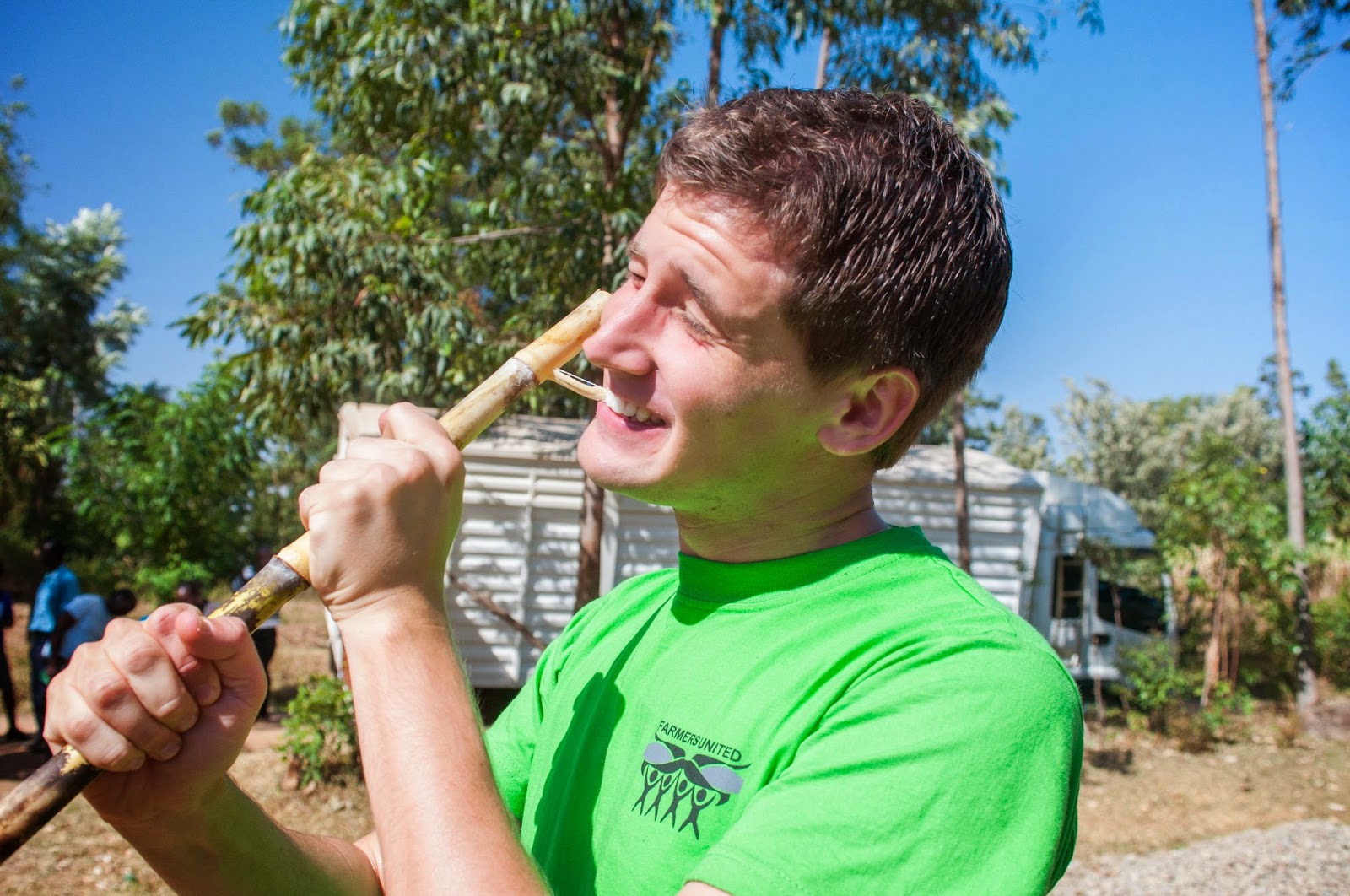
(Bonus: my highly public struggle eating sugar cane)

11 February, 2015

New Home- Photos

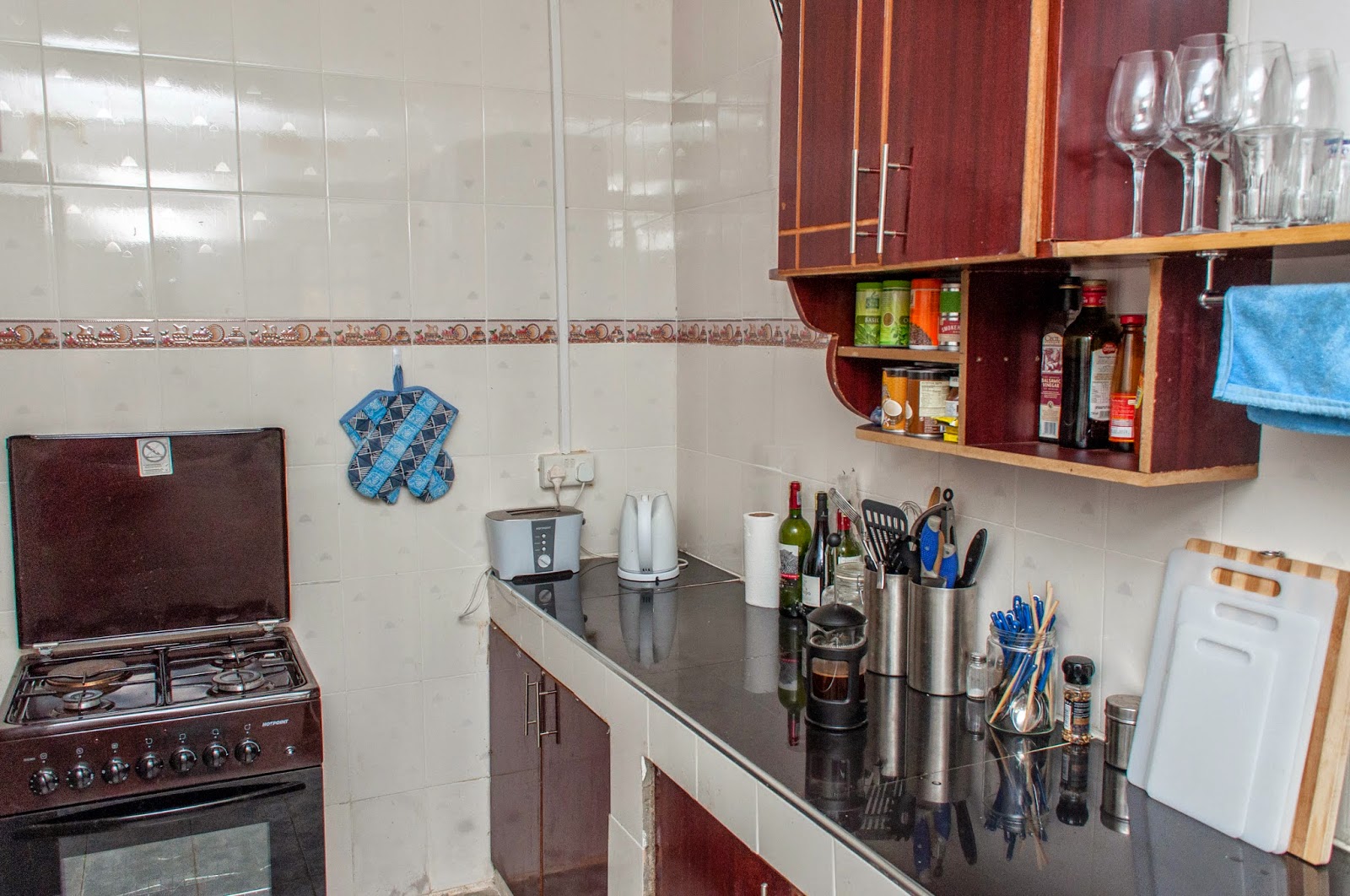
To complement the previous post about my new home, I've added some photos from inside the house too.

Sitting & Dining room:


Kitchen:


Bedroom:

03 February, 2015

Bungoma, New Home-a

Apologies for the groan-worthy title. Hope you'll still allow me to tell you a little about Bumgoma, my new home. It’s in Western Kenya, a few hours from the eastern shores of Lake Victoria; on the other side lies Uganda. Bungoma sits on some of the main road and rail trade lines between Uganda and Kenya (and its ports). We also cross the equator on every trip to the airport, so the day lengths here don’t change much and it gets hot in the dry season (as it is right now).

Interesting note on the name: either it came from the name of an occupying clan, or, and I prefer this explanation, it’s named for the drums (engoma) which used to be played to signal the elder meetings taking place here. 

I’d call it a small town but last time they counted in the nineties there were 60,000 people living here. It may be contained primarily within two parallel roads, but it’s bustling with commerce and construction. In addition to innumerable small shops, medium sized supermarkets are also plentiful. While they cover a relatively basic range of goods it’s really all the essentials, and they also double as home-goods stores, their many floors packed with identical plastic houseware items, metal utensils, and pricey appliances. There also more restaurants and bars you could visit in one weekend. Food options include Indian, pretty good pizza, and of course Kenyan, which I find beats Zambian food in both flavor and variety.

The new house is has been well-invested in and is quite homey and comfortable. Walls are painted cheery shades of blue and green, the kitchen is large and well stocked, and there are nice touches of fabric done by a talented tailor including curtains, pillowcases, and a comforter cover. After a few months, it’s fair to say home is feeling like home.

 (The new place, from the outside)

(Backyard tiki hut)

Work is equally coming into its own. After a busy few months of trips at the start, things were quieter from November to January. I’ve spent a lot of time developing some interesting projects, and its satisfying to see them reaching a point where they’ll be ready for regular use or sharing soon. I’ve also worked to create a plan for the communications component of our team. This includes arranging for speaking events as well as publications in different types of outlets, all to share our thoughts and work in building the farm finance sector. A colleague and I recently had the first of these pieces published on the Seep Network blog, you can read it here.

The next few months will include some new work trips, locations TBD, a return to the Princeton in Africa retreat, and likely attending and speaking at a couple financial inclusion/ farm finance events. With all that to get ready for, it’s good to have established a base here in Bungoma, and to have home here waiting.

31 January, 2015

Greensky Bluegrass: Windshield

Really enjoying this song by a great bluegrass band- driving bass line, slide guitar, big voice. Also recommend their album "Handguns".

13 January, 2015

Lake Malawi Trip Itinerary

Last year, Emily and I traveled to Lake Malawi from Zambia. I wanted to share a write-up Emily did of our itinerary for anyone who's interested in doing the same trip.

Day 1: Lusaka -> Chipata -> Lilongwe
- Bus from Lusaka to Chipata on Johabie (K150/pp). Buy the tickets a day in advance at Intercity.
- Take a taxi from Chipata to the border (shared taxis are K20/pp or K80 for the whole taxi).
- Border crossing is very easy and fast.
- Take a taxi from the border to Mchinji (2,000 MWK/pp).
- Take a minibus from Mchinji to Lilongwe (3,600 MWK/pp).
- We spent the night here: Mabuya Camp. Cheap backpackers that was fine for a transit night. We shared an A-frame that was $25/night.
- We had dinner at Latitude 13, a really nice/ fairly fancy place to have dinner that I would highly recommend! ($20-30/pp).
- We also bought all our groceries when getting in, so I would take the earliest Johabie bus at 5am to make sure you have enough time to cross the border, buy groceries, have dinner, etc. We arrived at Shoprite just as they were closing!

Day 2: Lilongwe -> Monkey Bay -> Cape Maclear -> Domwe Island
- We took the 7am AXA bus from Lilongwe to Monkey Bay. You don't need to buy tickets in advance. You do want to get there a bit early to ensure you get a seat, as they will fill it with standing customers as well. It is a big bus that acts more like a minibus, so a ride that should be ~3 hours took us 6-7 hours because it kept stopping. On the bright side, it was really cheap (I think equivalent to $2 pp). An alternative to this, especially if you're short on time, is to hire a private car, but expect to pay around $200.
- We then took a shared taxi from Monkey Bay to Cape Maclear. We weren't quite sure where to get off, there was a few false positives, so it's helpful to ask. Once we disembarked, someone waiting at the bus stop called us a taxi as there weren't any waiting around. It was roughly $10 pp when filled with 4 people. If you're planning to kayak out to the island you should try arrive in Cape Maclear at least 1 hour before sunset.

Day 2-5: Domwe Island
-We stayed at Domwe Island, which was amazing! We kayaked out to the island and had a tent platform that overlooked the water. You have to bring all your own groceries to cook, but they can catch fresh fish for you every night and they bake fresh bread in the morning. There's no electricity there, so they use solar lanterns at night (headlamps are also good to bring). There is an ice chest you can use to store perishables, and a gas stove to cook on. We brought our own tent but hired bedding and a mattress from them, since we were carrying all our groceries and luggage. Important to note that the island has little to no phone service, so try to coordinate everything you need to before you get there.
- Activities there included: hiking to the top of the island (really pretty views), catamaran cruise (highly recommend), kayaking, and snorkeling (not sure how good this would be in murky waters around the island).
- I think you should stay at least 2 full days here to make it worth it, 3 or 4 would be ideal. You probably don't need any more days than that.

Day 5-7: Malawi -> Lusaka
- Going back to Lusaka, I would recommend trying to go all the way to Chipata the first day, spend the night there (Dean's View is a good, cheap place to stay), then taking the Johabie bus back from Chipata to Lusaka the next day (good to purchase the tickets the night before when you arrive in Chipata).
- To get from Domwe Island back to Lilongwe is harder because the AXA bus leaves Monkey Bay too early for you to take the boat transfer from island and the taxi from Cape Maclear and make it. We planned on hiring a taxi from Cape Maclear (we made a plan with the taxi who brought us there when he originally dropped us off in Cape Maclear- phones don't work on the island!) and taking that taxi to Salima, the nearest town with minibuses to Lilongwe. Our taxi ended up needing to go back to Lilongwe anyway, so we got a good deal and took him the whole way. The drive took ~2.5 hours.


07 January, 2015

Ethiopia

This is a long overdue post I started while I was actually in Ethiopia in October.

From the sixth floor rooftop of my guesthouse in Addis Ababa (a skinny building that resembles a tower of jenga blocks), I can look out this strangely quiet part of the city. Except for infrequent hammering from the many construction sites around, some Ethiopian music playing from the numerous shops on the street, and a dove that has joined me on the roof, you would think everyone was still asleep.

Maybe it’s because it’s Sunday in, from what I can see, a very Christian country. Or maybe it’s the neighborhood I’m in; I know next to nothing about my relative location. But from where I’m sitting, you might call Addis a sleepy city.

My experiences around other parts of town, however, have shown me this is not an observation to be applied generally.  I’m here in Ethiopia on a partnerships building trip for work, the first conducted on my own. I’m holding meetings and field visits with Ethiopian microfinance institutions, and next week I’m visiting One Acre Fund’s program in Bahar Dar, a lake-side city in the north west.  My trip straddled a weekend, but lucky for me, I was connected to a friend of a friend living here in Addis. He and his roommate were exceedingly hospitable, and hanging out with them dramatically increased my ability to experience different parts of the city.

They also introduced me to Addis’s street café culture, which I sought out again today at what is apparently Ethiopia’s answer to Starbucks. I had a great meal and coffee, all for a few bucks. Everything is extremely cheap here, except taxis which are just moderately cheap. I get the sense you can eat pretty well in this city (Ethiopian food is excellent anyway) on a tight budget.

(Kaldi's: Starbucks rip-off in many ways, but nice coffee)

(All the Addis cabs were funny little French Peugeots or Russian Ladas)

Eating a dinner of take out shiro (so good), tibs and injera on the same roof tonight compels me to caveat my previous observation; this neighborhood can get loud when Manchester United is playing Chelsea. Another thing learned from being on the roof at night: the green hills surrounding Addis are fairly densely inhabited. I had no idea looking at them during the day, but at nights they glitter with lights.

I got out of the city to see a branch of one of the MFIs I was visiting. There was the usual congestion when trying to exit the city center, but suddenly we were at a tollbooth, and then driving on a beautiful new highway. Six lanes, freshly paved and painted, landscaping in the middle- and barely another car in sight. It’s a new toll road which had apparently opened just weeks before, and it was glorious. Funnily, despite the clear lane markings, you could still see drivers expecting each other to weave across the road in typical Addis fashion. On every over-take (picture three virtually empty lanes) there would be cautious honking and a quick burst of speed to pass.

(Fields of golden wheat)

(Kids running through teff, the grain used to make the Ethiopian staple bread injera)

Just a few hours outside the urban serpentine mess bursting at the seams, it was a totally different world. Fields of waving golden wheat, patchworked with green squares of teff or onions. No matter where out of the car window you stared it was an incredible, calming view.


Back in town, at the end of a day visiting a second MFI, the CEO was kindly dropping me off at my hotel when we were subjected to the power of Addis traffic congestion. The cause, when finally revealed, was a first in my experience: 2 lines of cars at a standstill, meeting head to head around a roundabout. But it wasn’t so bad, we had a great conversation and I learned all sorts of things about Ethiopia’s history (and faux-history). My favorite bit was how Addis is home to bubbling hot springs and was known as Finfinne for that reason. Menelik only became interested in the place, and eventually made it the seat of his empire, when his wife came down and wrote to him about it,calling it a new flower, which translates to Addis Ababa. One thing I really liked about Ethiopia is all the history around, both in physical form and in people’s minds. Of course there are many versions, but I loved how quick people were to talk about it. It’s a place I’d love to return to with more time and the chance to spend it exploring.