28 December, 2012
19 December, 2012
Guinea 2009: The Scenic Route
While cleaning out my old computer I found something I'd written almost four years ago after a trip to Guinea during my semester in Senegal. This section is about the particularly harrowing journey across the border. It was an entertaining read for me, reliving what was a pretty intense experience, and I thought others might enjoy it too.
In the morning we headed off into the great unknown. Truly,
that was Guinea in a nutshell; a country I knew preciously little about. Step
one was visiting the local garage,
where all forms of transportation congregate. We had heard the roads were bad,
so my companions started bargaining for 4x4’s. I found myself, carried by the
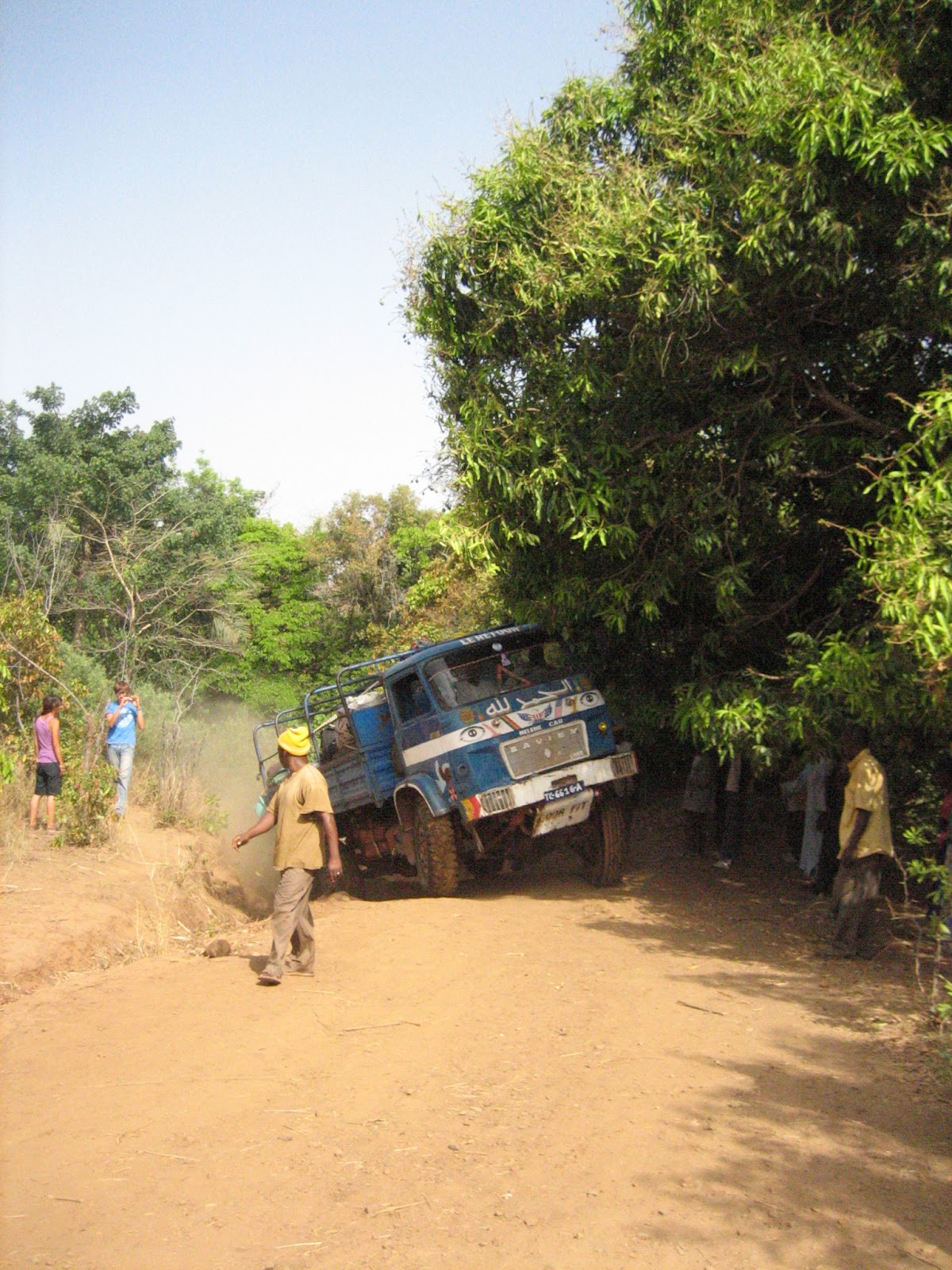
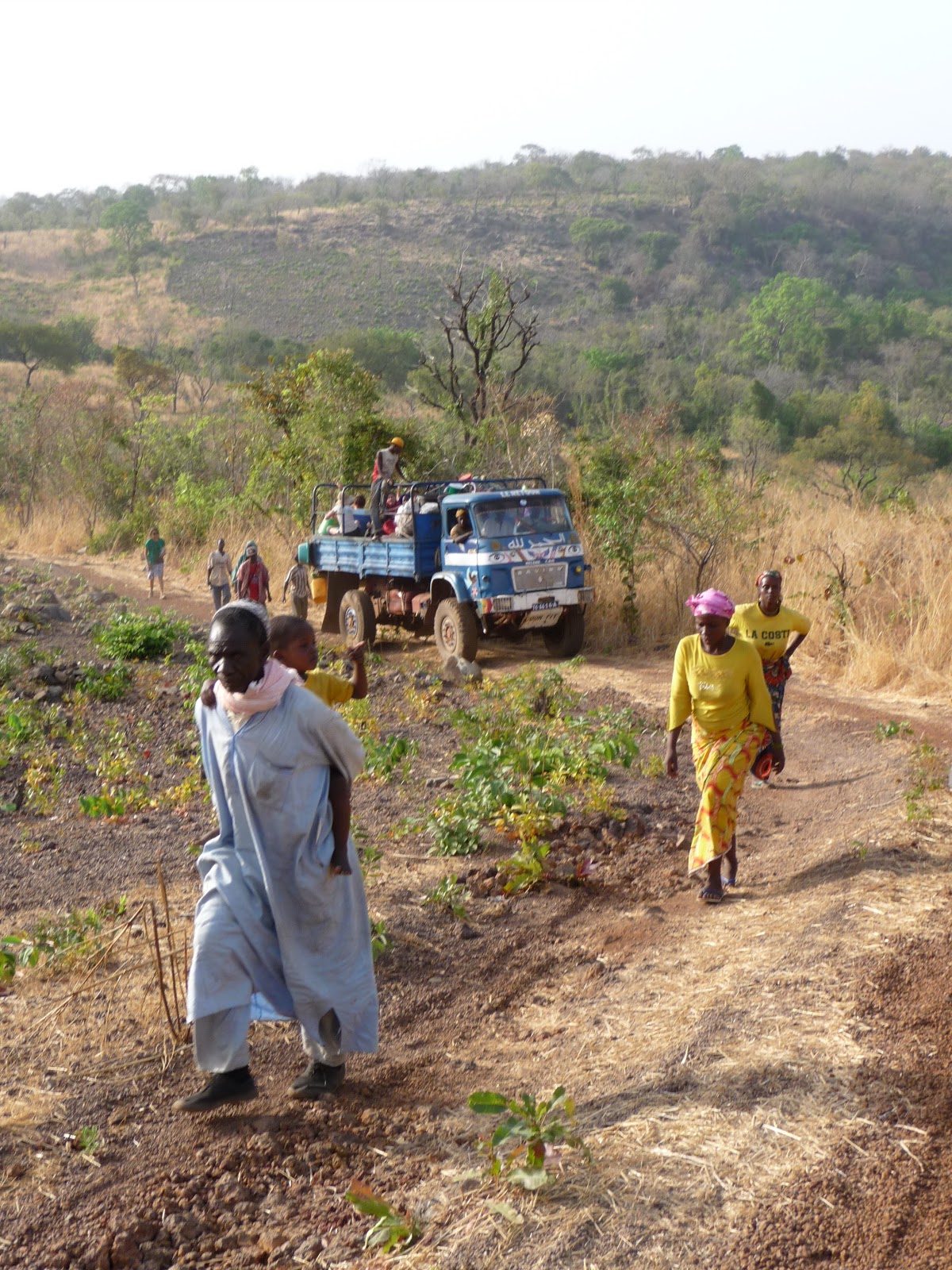
mob of drivers offering transport, by a large blue truck, camion, in the process of being loaded with cargo. A man speaking
English with an American accent approached me and I learned that, in terms of
inexpensive transportation, this truck was about as cheap as it gets. I have to
admit, I may have been motivated as much by financial concern as by a boyish
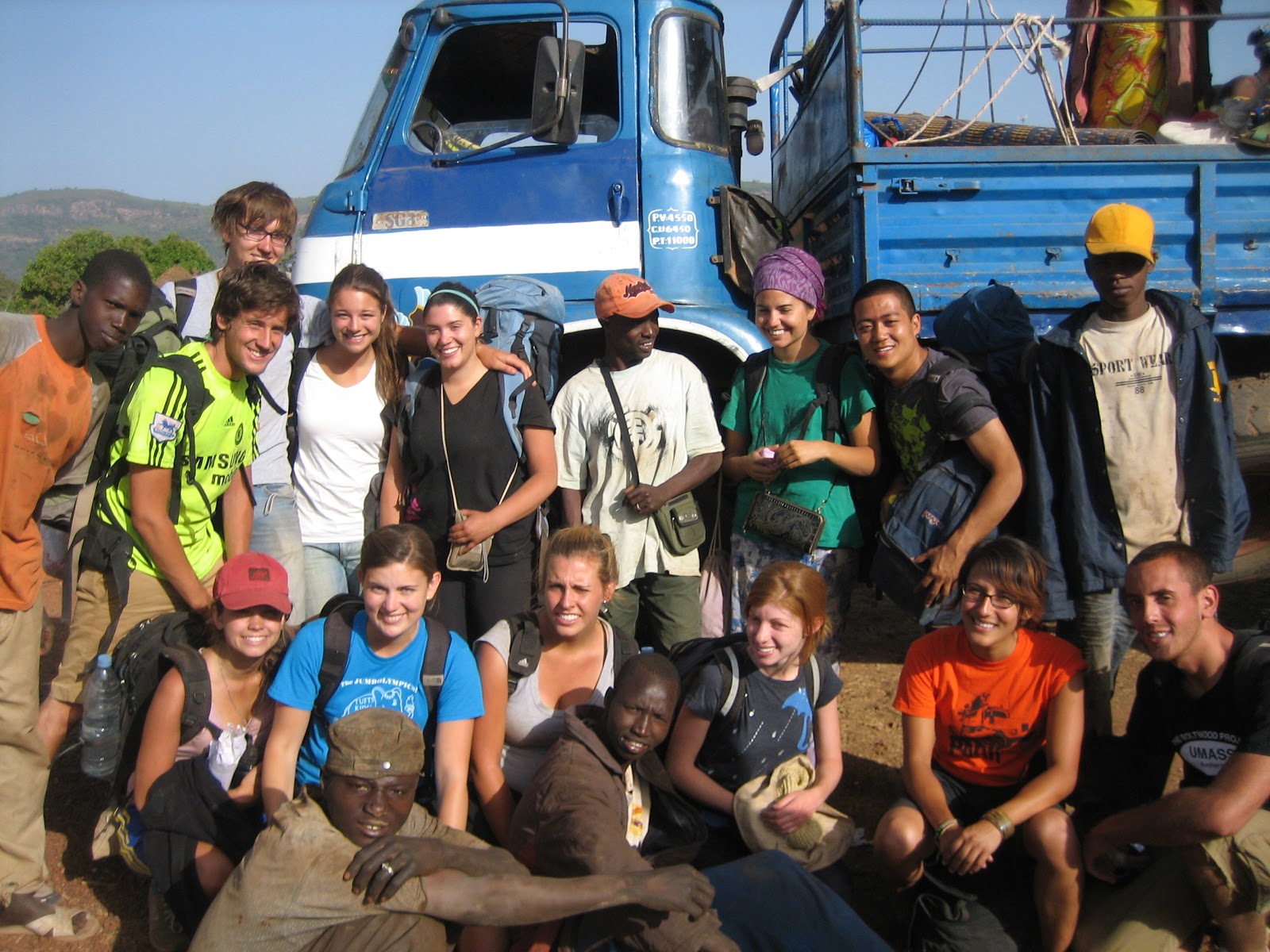
desire to ride in the back of a truck. It was in this way that twelve American
students, another five having just joined us, stumbled blindly upon a side of l’Afrique
de l’Ouest that until then had remained hidden to us.
A few things were
made clear very quickly when the truck began to load. First; there were a lot
more people accompanying us on this cross-border trip than we had anticipated.
By the time we left Kedougou there
were close to fifty people, and baggage, crammed into the bed of the truck.
Second; we were not going anywhere quickly. Already sweaty and cramped after
ten minutes, we wailed in dismay as we drove in a series of large circles,
first to an office, then back to the garage, finally to the driver’s house as
he had forgotten his bag. All the while, fifty passengers, from very old to
just born, jostled for leg, elbow, and breathing space in the back. Truly we
had no idea how long we expected to travel for. Optimistically, we clung to the
notion of somewhere around six hours. Worst case scenario; well, we didn't really consider that. We finally left Kedougou
mid-afternoon. Six hours later found us pulling to a halt at some type of
crossing as dusk began to grey the edges of our vision. We dismounted,
stretched, happy to be able to uncurl for a brief respite. Our first notion of
trouble was when, upon seeing the name of the town, we realized we still weren't even close to the border. We started to consider the looming reality of
traveling well into the night. We applied bug spray, put on warm clothes, and
prepared ourselves for a long evening.
Traveling in the daylight was hot and uncomfortable, yet
somehow traveling in the night was worse. Not only was it intensely cramped (we had collected more passengers after nightfall) but we had now
entered the mountains that constitute the border. This means we spent a
majority of the time leaning backwards as the beast of a vehicle labored to
make it up rocky mountain paths. The first time we had to dismount was somewhat
of an apocalyptic event. We were on the edge of a cliff, barely visible in the
dark, listening to the engine make the worst noises so far as we pitched and swayed
from one large rock to the next. Suddenly the tires lost footing and we began
to slide backwards down the mountain, continuing to rock perilously close to
the cliff edge all the while. People clenched the handholds for dear life,
women screamed and children cried. The driver’s assistants managed to stop
our rapid descent by wedging logs under the tires, and we quickly climbed down
and scrambled to safety. We took the children with us, since there was no one
else to watch them. There we were, climbing up a rocky mountain pass into the
dark with little children on our back, leaving behind us the sweep of the truck’s
headlights and the roar of its struggling engine while large wildfires burned
in ever widening circles on the nearby hillsides.
This was the story of the rest of the night. Huddled together
in the dark as the truck climbed until it could climb no further, at which
point we would dismount down the side, trek up the remainder of the incline,
and then pile back in. Each time was like a miniature border war; we had to get
in as quickly as possible to stake out what meager claims to space we could.
There were times when there was simply no possible way to fit another person
sitting down, so we took turns sitting atop the roll-cage bars, one of the more
harrowing experiences of my life. Our mindsets had changed very quickly from
that morning. It’s incredible how the brain adjusts in times of stress. I was
drawn into myself; my frame of reference becoming the walls of the truck, my
concept of time shrinking from next week to tomorrow to simply the next time
the truck stopped so I could readjust my contorted limbs. My mind slowed down,
as if in hibernation, unwilling to function at full speed because there really
is nothing good to think about and furthermore, nothing that can be done about
it. And that’s how we passed the time, crammed together, knees in our chins or
someone else’s, the only personal space found inside our own heads.
We made it to the border at ten thirty that night. We
stumbled down, dazed, half-functioning. Someone collected our passports and
herded us across the miniature stone wall that demarcated the line between two
sovereign nations. I
stayed in the truck to watch the bags, alone except for the children sleeping
on sacks of rice. The stars were much clearer there, and the moon was
absolutely brilliant, I wondered how much altitude we had gained. I was upset,
but not terribly surprised, when I learned that the truck had suffered a mortal
injury during one of the climbs and we would have to spend the night there at the border. A mechanic had been called but it was not sure how, when,
or really even if he would be coming. Everyone else began staking out spaces on
the ground or among the bags. We Americans sat despondently nearby. Our driver,
probably aware that we were in way over our heads, found us a man who offered
his house to us in exchange for buying breakfast in the morning. We collected
our things and as one pathetic, bedraggled group, tramped our way down a dirt
path in search of rest.
The moonlight lit up the landscape in a strange gray-scale
highlighting certain features sharply but leaving others hidden in darkness. We
were led to a dirt hut with a thatched roof surrounded by a tall stick fences
to keep the goats and chickens in, or perhaps other, larger animals out. There
were four beds for the twelve of us. Well two beds, really, and two wooden
planks. Seeing as we hadn't eaten since breakfast we opened up a can of tuna
and a can of ravioli and partook in a cold, but delicious, feast. We cleaned
and bandaged our wounds, filled and purified our empty water bottles, then
collapsed in exhaustion.
What little sleep I was getting was interrupted far too
early by a veritable symphony of roosters echoing off the hillsides. Whoever
said they crow at dawn was mistaken, or else African roosters are just more
eager to start the day. Upon learning that the mechanic had already done his work, we inhaled our
breakfast of bread and milky tea and piled into the truck. The other
passengers, having already gotten on, allocated us a third
the space we had the day before. We set off into the mountains of Guinea with
high hopes and somewhat rested bodies.
Incredibly, the roads were even worse on this side of the border. We bounced and jostled our way over them, our brains and organs slowly being liquefied. The sun, not wanting to miss a minute of the action, quickly joined us. Pretty soon we had consumed a good portion of our water supply, and everyone was still thirsty. The next time we stopped at village we decided it was imperative to find more water; there was no telling when we’d get another chance. A few of us asked an older man, who happened to be the village chief, and he led us to their water pump. It was a good thing we got that water because the day turned out to be a scorcher and there wasn't an inch of shade riding in the back. So began our week-long battle with water. Even after our adventure on the truck had finished, water was a huge source of concern. I have never craved water that way before, never been so dehydrated, never held water in my hand, weighing my thirst against the risk of sickness from impurities. It was a frightening feeling, rationing each sip, and it truly made me understand how much we take our drinking water for granted.
When people got sick, things got serious. Up until that
point we had been dealing with severe discomfort at the worst, maybe a few
instances of physical danger. But when one of the girls in our group started
showing symptoms of malaria, the reality of our situation became clear. There
was no choice available to us other than staying on the truck. We couldn't turn
around, and it was clear no better form of transportation would be showing up
anytime soon. Up until then, I had been worried that my poorly-informed transportation
choice would ruin my friends’ vacation, now I was far more concerned. When we stopped for lunch (a bowl of white rice and a thin yellow
sauce) we made sure to refill our water again. We had to ensure we were all
drinking enough; dehydration was not an option. We rested in the shade at that
village during the worst of the afternoon heat, sprawled out on cool reed mats. We set off again with a renewed
vigor and drive. It was becoming clear that we would be traveling into the
night again and we needed to keep our spirits up. We sang, played games, and
talked, but our situation could not be ignored for long. At one point we picked
up a good deal of speed on a flat road when we absolutely nailed a bump.
Everything on the truck was airborne for a substantial period of time. Many of
us collided with the iron roll-cage bars, and in the confusion some baggage was
lost, fallen off the back.
Up and down mountains, in and out of riverbeds, mounting and
dismounting the truck, baking in the afternoon sun. Everything about the trip was unknown. Every breakdown could be
for ten minutes or three hours, every stopover brief or long, and the response
to our inquiries about the distance to Maliville,
our own El Dorado, was always “far.” Dusk came again. I was glad to escape the
heat, but loath to spend more time traveling in the dark. We got off at the
base of what seemed like a sizable hill. We started climbing; the truck gave
us a head start. The path stretched on and on, around each corner was another
incline, and all the while we could hear the truck roaring and lurching its way
up behind us, threatening to overtake us if we walked too slowly. There was something very ominous
about the truck creeping up behind us, like an animal stalking its prey. It was
both our carriage and our prison, the source of our distress, but our only way out.
At the top of that mountain, we learned we would be spending
the night again. We received the news with quiet resignation. It was a surreal
situation that stretched on, no end in sight, nothing to do but submit to it. We stopped at a town called Fougou, where every one of us promptly
collapsed on the ground. Prepared to sleep in the dirt we laid out our
backpacks, but our driver once again had found somewhere to stay. It’s hard to
say whether the dirt wouldn't have been better, since we ended up on the
concrete floor of an unfinished bungalow, but the hospitality was much
appreciated. We opened up the last of our canned food and cookies, purified
more pump water, and tried to sleep despite the cold.
In the morning our lives took an interesting turn. For once
in the past two days we did not get
back onto the truck. It was a happy, if not a bit astonishing moment, finally reaching the point we'd all be longing for. The routine
we had come to accept had been broken. It had been decided by our driver (and protector) that we would get to our destination in a sept-place
while the other group of five continued with him. We said goodbye to our friends as they re-mounted and rode off into the sunrise. And that
was how we came to be free of our camion.
28 November, 2012
The Lighter Side
I've noticed that my posts over the last couple months have either been
about work or being sick. I felt the need to write this one to
assure you that there are good and fun things happening here too.
Bat Migration, Round 2
On a warm late October morning six friends and I wedged ourselves into a
rented Pajero and set off in search of bats. Of course, no trip up Great North
Road would be complete without the customary visit to Fig Tree Café; a little
oasis of coffee and baked goods for the bleary eyed traveler. A second extended
pit stop later on, this time to locate black-market fuel, left us with only
just enough time once reaching Kasanka to speedily pitch our tents before we booked
it over to bat headquarters. Seeing them for a second time let me appreciate even more the unique sight in front of me that evening, and again early the
next morning against a sunrise backdrop. The bats even put on a special pre-dawn Halloween show for us,
flying in near cliché pattern across a brilliantly lit moon complete with
halo.
(Low flying bats)
Elephant Orphanage
One of Lusaka’s special places, the Elephant Orphanage Project is located close to
the city just off the main southbound road. It’s a growing project modeled on larger ones, such as in Nairobi, which is currently focusing on increasing their capacity and improving the site's facilities. At the moment they house about half a dozen
orphaned elephants at their Lusaka site. Their stories are all moving, each having
been rescued when their parents were killed or when they were nearly killed
themselves. Watching them romping around their boma, play fighting, tackling
one another, and struggling dramatically to climb out of their mud pit, it was hard not to feel a sense of camaraderie with these surprisingly human
creatures.
(Sneak attack does not go as planned)
Market exploration
I’m seriously considering writing a guidebook to the markets
of Lusaka. It’s a good idea, I know, don’t steal it. Over the past few months,
on both workdays and weekends, I’m constantly being shown new places or stumbling on
them after taking a wrong turn. In that time I’ve seen the range of our city’s
commerce hubs. There’s City Market, where cow hearts sit across the aisle from
hand tailored dresses, and your shopping has less to do with your taste and
more to do with the flow of the crowd around you. Then there’s the Zambian Art and Design show, which sits at the other extreme, where the parking lot is crammed with
SUVs, and expats and Zambians alike come to select Christmas gifts from beautifully
made pieces. Deciding which to visit is sometimes less about what you want to
buy and more about what you want for lunch. It may sound dubious to those of
you at home, but it’s a viable weekend pastime here and there's always something new to discover.
Graduation
Last Saturday was the first time I’ve been able to attend
a graduation ceremony for KF students. This occasion marked the first of our students
to graduate from Chalo Trust School. The ceremony, though stifled by muggy weather, was well run and had great musical interludes. The graduates, sweltering in their
attire, looked more than ready in both the figurative and physical sense to
shed their gowns and embark onto the next stage of their lives. The most
inspiring moment of the day came from KF’s own Mr. Mukena, whose impassioned speech urged the new alumnae not to wait for handouts, but rather to take their future
into their own hands, to put themselves out there, intern, volunteer, and refuse
to take no for an answer until they begin realizing their dreams.
(Justin, KF Class of '12, with his mother at graduation)
And how could I leave out Thanksgiving dinner, which is becoming a great tradition in my life here. This year, two dozen people brought almost as many dishes, making it a feast of spectacular proportions. The spread featured all the standards plus some bonuses like pork belly, homemade bread, and butternut soup. One long communal table set with candles and construction paper hand turkeys really made it feel like the family dinner many of us were missing back home. By the end of the night I was plenty full, and plenty thankful.
Let me close with the last, perhaps greatest, development of
the past months. I’ve been introduced to what could be the most spectacular
doughnuts ever to be deep fried and sugared, right here in Lusaka. Perhaps I’ll
look back on this post, shake my head and note, sadly, that this was the beginning of my downfall. I think it’s probably in my best interest to embark on another
weekend adventure soon, if only to break what is fast becoming a tasty weekend
ritual.
Labels:
Zambia
27 November, 2012
The Appreciator
Check out my friend Emma's brainchild, a blog about appreciation in all forms. With contributors from all over, it's a place to acknowledge, celebrate and groove on the things that matter in life.
31 October, 2012
On the Importance of Insurance
How well do you know your insurance? I’m directing this
specifically to friends living abroad. Do you know what hospitals in your area
are approved by your policy and what your coverage is? Two weeks ago I was ambushed by a
mystery disease and had to figure all this out as I went along. My advice is to
check now.
I’ll preface this by saying I’m back home in Lusaka now and
feeling much better than before.
After feeling sick for a few days I eventually
sought the advice of my good friend, who’s a neurologist, and his colleague, an
infectious disease specialist. I went to the hospital where I received an
ever-evolving diagnosis from the doctors there. For a while they thought it could be meningitis, then
they were sure it was malaria, then a bacterial infection. After a few days of
not knowing what to treat, I opted to use my evacuation insurance and be flown to a very good hospital in
South Africa. That process was pretty impressive; the ambulance drives right out onto
the tarmac to meet the plane. It was a small one with a bed for the patient and
a few seats for the medical team. The team was top quality and I felt like I
could really put my trust in them, although I may have been influenced by their sweet matching jumpsuits. After an hour and a half in the air we
landed in Joburg where another ambulance was there to get me. No lines, no
waiting; this is the way flying should be.
The battery of tests they ran in SA all came back normal and
they were able to rule out anything life threatening. Ultimately they
diagnosed me with some mystery virus that needed to burn itself out. After
getting jabbed in every part of my body, sampling a diverse array of pain
killers, getting my brain imaged and my spinal fluid drawn, and not being able
to go anywhere without trailing my IV drip, I feel very lucky and happy to be
out of hospitals with no more serious diagnosis. I also feel very fortunate to
have had so many people help me out during the process, checking in on me and
helping me make decisions about my health in a confusing situation. It's hard to be far from family at a time like that, but I know they were glad I had people watching out for me here. Insurance
is important, but good friends are equally vital.
16 October, 2012
FINCA, A First Look
FINCA was founded in 1984, only one year after Grameen Bank
(the brainchild of Nobel laureate Muhammad Yunus), making it one of the oldest
microfinance institutions in the world. The organization was born from the notion
that a lack of collateral was the main obstacle preventing people with low
income from accessing credit. Allowing a group of borrowers to personally guarantee one
another in lieu of physical security was the cornerstone FINCA was founded on.
In 2001, FINCA Zambia opened its doors for the first time in
Lusaka. It arrived with the strength of 17 years experience and development backing
it up. A pioneer in the Zambian market, its model met the needs of local small
business people in new and innovative ways. Access to capital without
collateral enabled these people to grow and expand their operations. What’s
more, FINCA offered an approach targeted to their specific needs in a way large banks
were previously unable to. It wasn’t long before the enormous potential of
filling this gap was recognized by others and the microfinance market started
to boom. Currently, there are at least eight MFIs operating in Zambia, with
others looking to enter the market and traditional banks developing their own microbusiness departments. Offering Zambians access to traditionally inaccessible
financial services (going beyond just loans) is a thriving business right now,
and you will find the same holds true in many developing countries around the
world.
When we consider my experience with FINCA we’re talking
about a much smaller timeline of course. I’m coming up on my two month mark soon,
and it’s about time I explained what I’ve been doing. My first year in the
Junior Manager Program was designed to give me an inside-out understanding of
how FINCA Zambia’s operations work. Logically, the place to start was as a Loan
Officer; the front line and foundation of the whole organization. After a few
weeks of orientation, mentorship and training, I became a certified Business
(Individual) Loan Officer exactly one month ago. This means I find my own
clients, conduct analyses, disburse loans and manage a portfolio. There’s no
better way I could’ve built my understanding of this business than working at
its heart. I’ve learned a great deal about how businesses operate, and how to analyze
those operations within the specific context of the endemically informal Zambian
market. Each loan is a unique challenge with an intriguing story that must be
unraveled. I take great pride in tailoring the right loan for each client and
seeing them use it to improve their businesses. Since starting, I’ve taken on
ten clients in businesses ranging from groceries to butcheries to pie-making.
The loans have ranged from 600 to 2,000 USD and have been used for buying soft
drinks, rebuilding a roof, doubling pie production and buying chicken feed, to
name a few. My repayment rate is, as of now, perfect, but it we’ll see how it
fares over the next week as many of my first payments come due.
FINCA has brought many changes to my life here. I ride my bicycle
to work or take the bus. My office is deep in the bustling downtown area, nestled
between bus stations and markets. I work with an all Zambian staff, and most
conversations in my office don’t take place in English. This has really given
me the opportunity to improve my understanding of Nyanja (my starting point in
the list of 70+ local dialects). My coworkers are really supportive of my
efforts and go out of their way to help me learn, which is very encouraging.
All of these things have boosted my understanding of Zambia and given me a much
more acute sense of belonging. It’s a function of both the time I’ve spent here
and the new environments I’m in, but the result is I’m really enjoying where
this new year is taking me.
(Soweto Branch)
(Sikufele, my first client, at his grocery)
Side note: while it's not New England autumn foliage, our trees are putting on a pretty spectacular display of their own right now.
18 September, 2012
Like Riding a Bicycle
Lusaka is not flat.
Like many things about this city, its rolling hills are
subtle and understated. But when you’re pedaling up one in the surprisingly hot
early morning sun, they become slightly more obvious.
This is one of many new things I’ve learned since downsizing
from four wheels to two.
I’ve learned there’s such a thing as bike traffic. Though I’m
usually the one getting passed, I had to laugh the first time I got stuck in a
line of slow bikers- sometimes there’s just no way to escape Lusaka congestion!
I’ve learned that biking alongside minibuses requires
careful study and concentration. It doesn’t take long to notice the subtle
signs that can help you predict their erratic behavior. Sure, the conductor banging
on the roof usually means they’re about to pull out (blindly) into traffic, but
if he hasn’t actually closed the door, it’s probably just a ploy to attract more
customers. Also, take note of whether pedestrians make even the faintest eye
contact with the driver; they won’t hesitate to pull the bus over anywhere,
even if it means running you over. No bus stop? No problem.
On the flipside, I’ve learned Lusaka road rules make for a
unique and entertaining commute. Sometimes I feel like I’m playing one of those
old computer games like SkiFree the way I hop curbs and slalom potholes (don’t
worry Mom, I’m wearing a helmet). I’m just waiting for that abominable snowman
to jump out of the trees and chase me down waving his little stick arms.
I’ve learned that a loaf of bread is a perfectly reasonable
amount of groceries to attempt to carry while riding, whereas a whole chicken,
a 24 pack of toilet paper and other assorted items is most certainly not.
I’ve learned danger lurks in surprising places. Crossing the
railroad tracks with a train approaching? No worries; it’s moving about a meter
a minute. Nor is there any great risk when fording the main trucking highway.
Spot a gap between those diesel fuming monsters, commit, and you’ll be fine. It’s
in the crowded markets where I meet the true nemesis of my commute: the
wheelbarrow. Here they call them Zamcabs; wheelbarrows with rebar extensions soldered
to their ends to allow them to carry extra large loads. They’re the main means
of shipping goods around the markets, and they get paid by the trip so you can imagine how quickly they’re barreling through the crowds. Being unlucky enough to end
up in the path of one of these will really put a dent in your day (and your
shins).
I’ve learned that, for a guy who hasn’t owned a bike since
he was 15, I’m enjoying my new mode of transportation much more than I was
expecting to. Let’s see if I change my tune once the rains start…
Subscribe to:
Posts (Atom)